Feed the Room, Not the Bin: A Corporate Lunch Blueprint for 2026
Somewhere along the way, the corporate lunch became a transaction. Someone has fourteen minutes, a catering portal and a headcount, so they order the usual: sandwiches, crisps, a fruit bowl, maybe a tray of brownies. The meeting is fed. Nobody is happy.
The problem is not sandwiches. The problem is the absence of thought. A lunch in a meeting room is still a hospitality moment, even if the room has a projector and a whiteboard. In 2026, with teams spread across offices and diaries packed tighter than ever, a good lunch is one of the few things that gets people to sit down together and actually talk. It deserves more than a shrug.
The Beige Buffet Is a Choice
Dry sandwiches in plastic trays are not inevitable. They happen because lunch is ordered late, because someone is risk-averse, because the budget is tight, because the same supplier has been used since forever. None of those reasons are unreasonable. But the result is a table that says: we had to feed you, so here.
A good corporate lunch does not need a huge budget. It needs a point of view. One warm dish. Two generous salads. Good bread. Something sweet. Plenty of water and proper coffee. That is a better lunch than a dozen pale sandwiches arranged in a fan.
Start With the Room, Not the Platter
Before you choose a menu, ask what the meeting actually is. A standing networking lunch is different from a workshop, which is different from a board meeting, which is different from a training day. If people are presenting, avoid food that requires two hands and perfect timing. If people are workshopping, give them something they can graze on without losing the thread. If it is a long session, plan for a mid-afternoon top-up rather than pretending one lunch will carry everyone to 5pm.
Also ask about the room. Is there a kitchen? A fridge? Somewhere to put rubbish? Is the room warm? A lunch that sits in a hot meeting room for two hours is not the same lunch as one served straight from a cool box.
A Seasonal Blueprint for November 2026
At this time of year, we build corporate lunches around warm, grounding food that still feels fresh. Think roast squash and sage tart; braised leeks with mustard vinaigrette; roast chicken with lemon and thyme; lentil, walnut and parsley salad; warm rosemary focaccia; pear and almond cake. In spring, swap the squash for asparagus and peas. In summer, bring in tomatoes, new potatoes and berries. The principle stays the same: one warm anchor, two generous salads, good bread, something sweet, and plenty of water.
This is not about showing off. It is about giving people a plate they are pleased to see. A lunch that looks cared for changes the mood of a room. People linger. They talk. The meeting feels less like a transaction and more like a team.
Dietary Inclusion Is Not a Tax
Too often, the vegan option is an afterthought: a plate of roasted vegetables, a dry falafel, a salad with no protein. The gluten-free option is a lone packet of crackers. This is not inclusive. It is visible, and it makes people feel like a problem.
Build dishes that are naturally plant-forward. Make sure the gluten-free option is a proper serving, not a side. Label everything clearly. Provide separate serving utensils. Ask about allergies and religious requirements in advance, and take the answers seriously. A plate of roasted vegetables is not a main. A good lunch should have at least one substantial option for everyone at the table.
Timing Is Part of the Menu
Food arriving at 10.45 for a 1pm meeting is not early. It is tired. Aim for delivery around forty-five to sixty minutes before you want people to eat, and keep cold food cold and hot food hot. Do not put everything out at once if the meeting is long. A lunch that sits out for three hours is not generous; it is a food safety risk with a garnish.
Also think about the afternoon. A heavy, carb-loaded lunch at 12.30 can make a 2pm workshop feel like a slog. Balance matters. Coffee after lunch matters. Water on the table matters. These are small things, but they are the difference between a lunch that powers the meeting and one that quietly derails it.
Presentation: Bowls, Boards and a Bit of Self-Respect
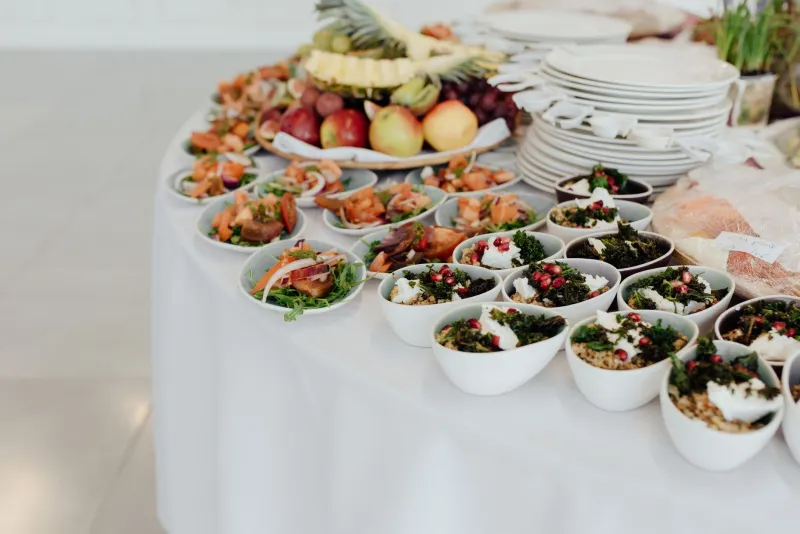
You do not need linen napkins and a florist. You do need real bowls if you can, or good-quality disposables that do not buckle under a spoonful of lentils. Arrange food so it looks abundant. Put out lemon wedges, flaky salt and chopped herbs. A small dish of something sharp and bright costs pennies and changes the whole table. Label the dishes. Keep the fruit bowl away from the sandwiches and give it a purpose: sliced oranges, dates, a bowl of grapes that are actually ripe.
The bin is not a menu item. Count properly, order in batches, keep leftovers chilled and offer them to the team if it is safe to do so. Compost what cannot be used. Avoid individually wrapped everything. A corporate lunch in 2026 should not look like a petrol station shelf.
The Lunch Is Part of the Meeting
A well-designed lunch does not fix a bad meeting. But a thoughtless one makes a long day longer. The food is part of the hospitality, and hospitality is part of how people feel about the time they spent in the room. Feed the room properly, and you feed the conversation too. That is worth more than a tray of beige sandwiches.