Where the Menu Begins: A Welsh Larder on the Top Table
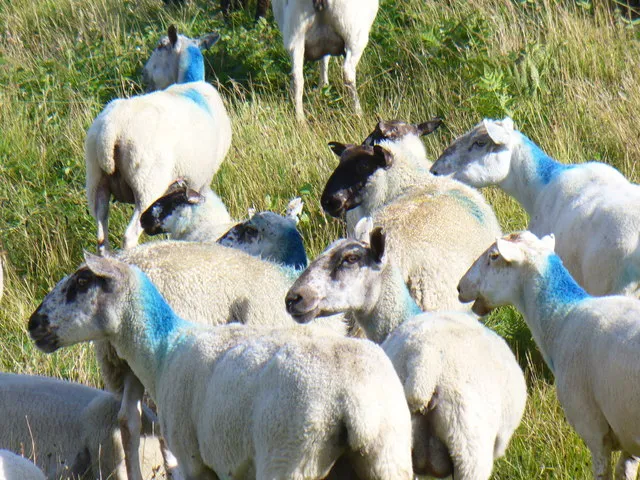
Photo: Colin Smith, CC BY-SA 2.0, via Wikimedia Commons
You can trace a menu the way you trace a river. Follow it back far enough and you end up somewhere with weather, mud and a person in a coat making a decision about salt.
We cook under a name that has the shape of a Welsh place name, and it would be strange not to honour that. So much of what we send out of the kitchen starts within an hour or two of the hills — and this is what that looks like when it meets a top table in November.
Salt marsh lamb, and the taste of the tide
Start with the meat, because it makes the argument for you.
Salt marsh lamb grazes the flats along the Carmarthenshire coast, where the grass is mixed with samphire, sea lavender and thrift. The animals take on a faint salinity, a denser texture and a sweetness you simply don't get from upland pasture. It's a slow flavour. It tastes like somewhere.
Its season is late spring into early autumn, which is worth knowing before you fall in love with it for a February wedding. Out of season, the same farms will offer hogget — an older animal, deeper and more savoury — and it braises beautifully. Served as a slow-roast shoulder for the table rather than plated slices, it also happens to be one of the most generous things you can put in front of eighty people.
Laverbread: the breakfast that became a canapé
Laverbread is seaweed boiled down for hours until it turns dark, soft and faintly ferrous. In Wales it is eaten for breakfast with bacon, or rolled in oats and fried. It is not, traditionally, an event food.
It should be. Folded through a croquette with cockles from the Burry Inlet and a squeeze of lemon, it gives you a canapé that tastes of the coast and costs very little. It also gives your vegetarian guests something that isn't stuffed with mushrooms and apology.
There's a practical point buried here. Regional ingredients work hardest at the start of a meal, when people are standing and curious, and they work hardest of all when they're in a small, crisp mouthful that doesn't need explaining.
Perl Las, and the blue that behaves
Perl Las is a soft blue from Caws Cenarth in the Tywi valley — creamy, gently piquant, far less assertive than a Stilton and far easier to build a menu around.
That mildness is a gift. A blue that overwhelms everything near it locks you into a narrow menu. A blue that's soft enough to melt will carry a rarebit tart for a starter, sit on a cheeseboard, and hold its own against pickled walnut and watercress without a fight.
Rhubarb from a walled garden
Heritage rhubarb, forced in the dark in early winter, is the kind of ingredient that makes a pudding look effortless. Poached lightly so it holds its shape, layered with a set vanilla custard and a scatter of oat crumb, it's a rhubarb and custard that admits what it is and then quietly outperforms.
Buy it in season and it costs almost nothing. Buy it in July and you'll be paying for aeroplane fuel. Which is the unromantic truth of provenance: the story only works if the calendar agrees.
Building the three courses
Here's how it falls together, and why each piece earns its slot.
- Canapés: laverbread and cockle croquettes, lemon; Perl Las and pear on oatcakes.
- Starter: Perl Las rarebit tart, pickled walnut, watercress — warm, sharp, and a menu talking point within ten seconds of sitting down.
- Main: slow-roast salt marsh lamb shoulder for the table, wild garlic, new potatoes, samphire, a jug of properly reduced gravy.
- Pudding: forced rhubarb, set custard, oat crumb.
The structure matters as much as the ingredients. Three named producers on a menu is plenty. Seven looks like a press release and it makes the kitchen's life difficult. Choose the ones doing something you genuinely can't buy elsewhere, and let the rest of the plate be excellent and quiet.
There's a cost consequence, too. Shoulder is cheaper per head than rack or loin, and better suited to a long table. Laverbread is inexpensive. Perl Las is not wildly priced for what it delivers. Rhubarb in January is a bargain. The expensive parts of this menu are the ones you'd expect — the lamb, the staffing, the hours — and the character is nearly all coming from the cheap end.
Telling the story without a lecture
This is where good sourcing goes wrong. Someone stands up with a microphone and delivers four minutes on food miles, and the room's attention quietly leaves the building.
Keep it to one line, spoken or printed. 'The lamb is from the marsh at Pembrey; the laverbread is from the Gower; the cheese is from Caws Cenarth, about twenty minutes from here.' That's it. The room will do the rest.
The real work happens before the meal. Brief the front-of-house team so that when a guest asks where the lamb is from, the answer arrives instantly and warmly, with a bit of detail — the salt grass, the tide, the fact that the season finishes in October. A server who knows the story can carry a whole menu. A menu card that has to do it alone reads like a leaflet.
And the vegetarian main deserves the same provenance as the lamb, not a footnote. Laverbread, Perl Las, a heritage beetroot — there are Welsh answers to that question, and they're better than the standard risotto.
A menu that knows where it lives
None of this requires a farm shop relationship or a standing order with a specialist supplier. It requires a short list of ingredients with a place attached, a calendar, and the discipline to stop at three names.
The rest is cooking. The tide does the seasoning, the walled garden does the pudding, and the top table gets something worth talking about while the plates go round.