After the Big Day: Building a Boxing Day Buffet That Stands on Its Own
Boxing Day has an odd brief. Everyone still wants to feel looked after, but nobody wants another plate of turkey, sprouts and bread sauce. The temptation is to reheat Christmas dinner and call it a buffet. The better move is to give 26 December its own menu: fresher, sharper, generous, and almost entirely ready before the first guest arrives.
Start With a Different Brief
Christmas Day is rich, traditional and fairly heavy. Boxing Day should feel like a release valve: cool plates, bright pickles, good bread, a little smoke and salt, one warm dish doing the comforting work. Think of it as a feast with its sleeves rolled up. It is still celebratory, but it does not need to imitate the day before.
The practical advantage is obvious. A Boxing Day buffet can be assembled rather than cooked from scratch at lunchtime. That means less time with your head in the oven and more time sitting with the people who have travelled to see you.
One Hot Dish, Chosen Carefully
A buffet needs a warm anchor, especially in late December. Choose something that can be made ahead and reheated in one tray without turning to wallpaper paste. A deep cheese and leek tart, a creamy potato and celeriac gratin, or a mustard-and-cheddar bread pudding all fit the bill. They are rich enough to feel festive, but they are not Christmas dinner in disguise.
If you already have a ham, resist the urge to warm it through again. Cold ham is one of Boxing Day's great pleasures. Slice it thinly, let it come up to room temperature, and serve it with mustard mayonnaise and something sharp. The hot dish should be the vegetarian-friendly centrepiece or a simple traybake, not a second round of meat.
The Cold Table Does the Heavy Lifting
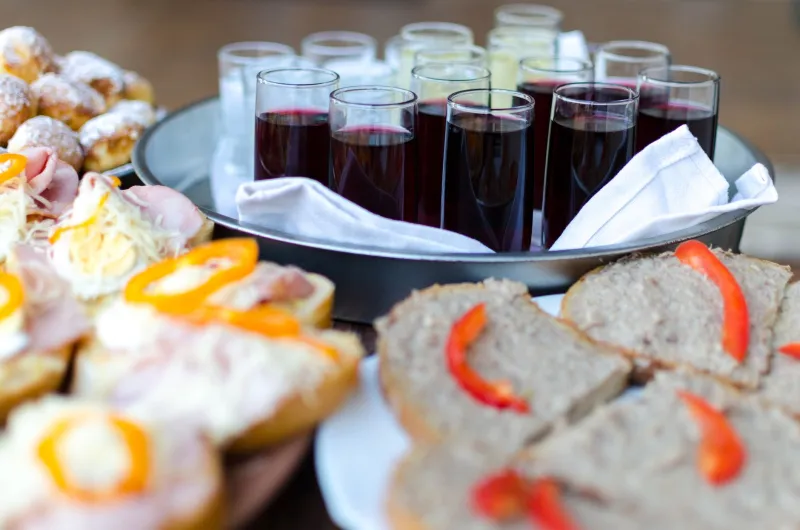
A good Boxing Day table is two-thirds cold and one-third warm. That ratio keeps things easy and stops the meal feeling like a rerun. Build the cold side around contrast: sliced ham, smoked salmon, a wedge of good cheese, pickled walnuts, cornichons, beetroot in vinegar, and a winter slaw with red cabbage and apple.
Add one substantial salad that can sit out without collapsing, such as dressed lentils with roasted squash and herbs, or butterbeans with lemon and parsley. Bread matters more than people think. A couple of good loaves, sliced and piled in a basket, make the whole table feel intentional. So do proper butter and a small dish of flaky salt.
Leftover Ham and Cheese, Used Properly
Leftover cheese should not be melted into a vague sauce. Put it on the table as a board, but give it companions: chutney, celery, grapes, oatcakes, and a few cheese scones if you have been organised enough to bake them on Christmas Eve. A wedge of Stilton with a spoonful of quince is more memorable than a dozen reheated canapés.
Leftover ham is best sliced cold and used as an assembly job. Set out soft rolls, mustard mayo, pickles and a bowl of ham, and let people build their own. If you want something slightly more polished, fold thin slices into a tart with leeks and cream, or lay them over a platter of dressed white beans. What you are avoiding is the sad cycle of reheating meat until it gives up.
A Buffet That Includes Everyone
Dietary guests should not be handed a separate plate at the back of the kitchen. Build the table so that at least two substantial dishes are vegetarian, and make sure they are not afterthoughts. A cheese and leek tart, a mushroom and chestnut pâté, or a warm butterbean and cavolo nero salad will all hold their own.
For gluten-free guests, keep bread and crackers separate and check labels on sausages, sauces and stock. Nut-free is often simpler than people expect, but avoid loose nuts on the cheese board if there is any doubt. Small handwritten labels are not fussy; they are kind. They also stop you having to answer the same question six times while trying to find the corkscrew.
A Timeline That Keeps You Out of the Kitchen
Christmas Eve: make the hot dish, cool it fully, and refrigerate. Make any dressings, bake cheese scones or twists, and roast vegetables for a cold salad. Set out a platter or two so the table is not a blank canvas on the day.
Christmas night: after the main event, slice any leftover ham and store it covered in the fridge. Keep cheese wrapped properly, not cling-filmed into a sweaty lump. Make a note of what needs using first.
Boxing Day morning: put the hot dish in the oven on a low setting to warm through while you lay the cold table. Slice bread, decant pickles, dress the salad at the last minute, and bring the ham out early so it loses its fridge chill.
Thirty minutes before lunch: warm the bread, put out the cheese, and check the hot dish is piping hot throughout. Then stop. The point of the menu is that you are not still chopping when the doorbell goes.
The Quiet Luxury of a Table Already Laid
Boxing Day catering is not about showing off. It is about giving people a soft landing after the big day: a plate that feels fresh, a table that looks generous, and a host who is actually present. At Treforis, we like a menu that can be mostly made ahead and finished with a few small, generous touches.
So skip the reheated Christmas dinner. Put out the ham, cut the tart, open the pickles, and let 26 December be its own feast. It is the day after the day before, but it does not have to taste like it.