Before the Tinsel: Why Late November Deserves a Proper Feast

Photo: rustic late autumn feast table game pie celeriac gratin quince apples candles UK, via i.etsystatic.com
There is a strange little lull in the catering year, and it arrives right about now. The bonfire smoke has cleared, the last fireworks have fizzled out over the playing field, and the Christmas menus are hovering in the wings without quite being due on stage. Mid-to-late November is a blind spot. Too early for tinsel, too cold for a garden party, and yet hosts still want an evening that feels like something.
At Treforis Catering, we rather like this in-between season. It asks for a different kind of feast: one that leans on the market rather than the advent calendar, warms the room before the first plate lands, and gives guests permission to enjoy themselves without being told it is Christmas yet.
The fortnight nobody plans for
Look at the diary and you will see it clearly. Early November belongs to Bonfire Night: sausages, soup, sparklers, a bit of smoke in your coat. December belongs to Christmas: parties, lunches, drinks, the full tinsel-and-sprouts performance. The weeks between the two are often treated as a holding pattern.
But people still gather in that gap. Teams book a meal because the year is winding down. Families meet before the December diary gets ridiculous. Friends who cannot face another Christmas do decide to have a quieter dinner instead. Birthdays do not pause for the season, and neither do weddings, christenings or community suppers. The opportunity is not to pretend it is Christmas. It is to make late autumn feel like an occasion in its own right.
Let the market set the tone
Late November is a generous time to cook. Game is in good supply—pheasant, partridge and venison all make sense on a menu that wants depth without fuss. Celeriac is at its best, all knobbly and unglamorous until it is roasted, puréed or sliced into a gratin. Quince brings that perfumed, slightly old-fashioned note that makes a pudding feel special. Stored apples are still crisp and useful, whether they end up in a sauce, a stuffing, a crumble or a chutney.
This is the sort of produce that makes a feast feel grounded rather than themed. A starter of potted game with toast and cornichons. A main of pheasant braised with cider and apples, with a celeriac gratin alongside and buttered greens on the side. For vegetarians, a whole roasted celeriac or a mushroom and leek pie can hold the centre of the table just as confidently. Pudding could be quince baked with honey and bay, or an apple and almond tart with cream.
Nothing about that menu shouts Christmas. It simply says: it is cold outside, and we have made something worth sitting down for.
Warm the room before you warm the plates
In catering, November is as much a battle with draughts as it is a menu-planning exercise. Guests arrive with coats, cold hands and a reasonable expectation of comfort. A few practical touches do more for the atmosphere than any amount of fairy lights.
Start with the room itself. Close doors early, clear the draughts, and make sure there is somewhere sensible for coats to go. If the venue has a cold corner, do not put the older guests there. Bring in extra lighting at low level—lamps, candles, a few warm pools of light—rather than relying on a single overhead glare. A welcome drink helps, but a warm welcome drink helps more: spiced apple juice, a hot pear and ginger cordial, or mulled cider if you want the bonfire note without the Christmas cliché.
Then think about heat on the plate. Hot food in a cold room loses its charm quickly. Preheated plates, covered serving dishes, insulated jugs for gravy and a clear plan for getting food from kitchen to table without a long queue all matter. If you are serving buffet-style, keep the hot dishes together and replenish little and often rather than leaving one vast tray to cool. A warm pudding at the end is not just comfort food; it is practical hospitality.
Celebratory, not premature
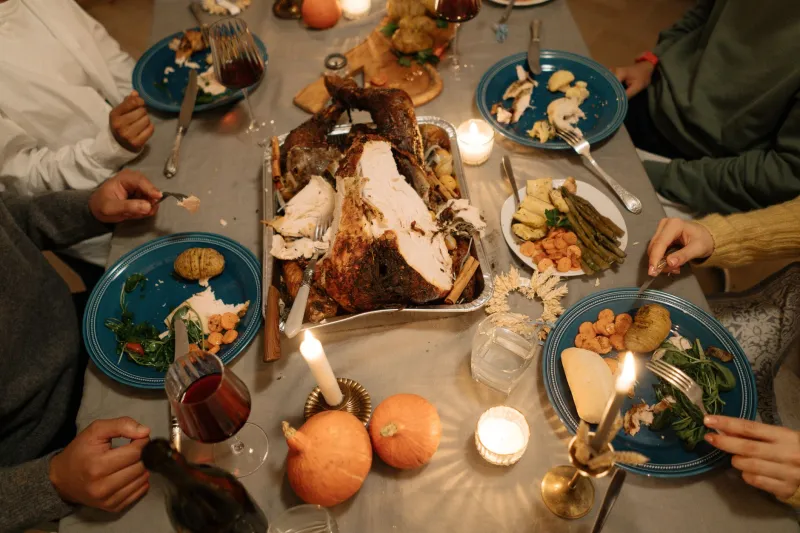
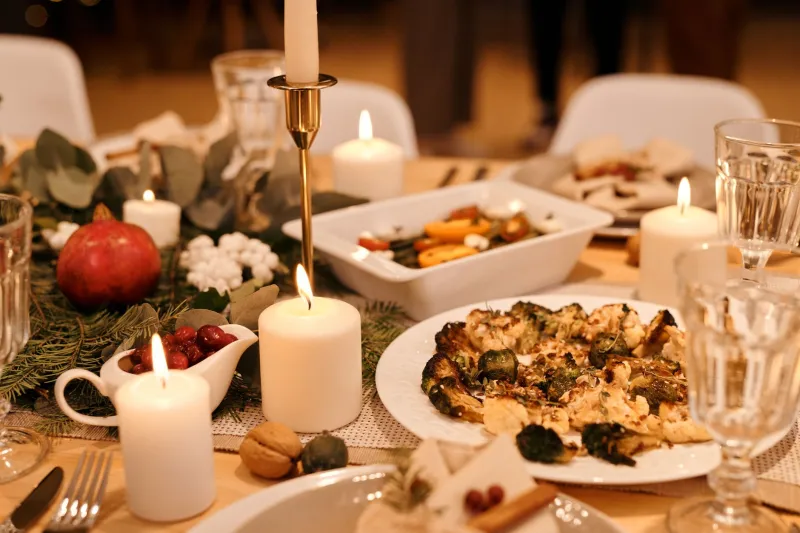
There is a temptation, once November gets dark, to reach for the Christmas cues. Mince pies. Mulled wine. A sly bit of tinsel. Resist it, at least for this kind of feast. Late November has its own visual language: burnished leaves, rosehips, bay, nuts, quince, dark green cabbage leaves, candles in simple holders. It can look festive without looking like December.
That also gives hosts a bit of breathing space. Guests are not yet exhausted by Christmas food, so they are more likely to enjoy a proper main course and a pudding. They are not comparing your evening to the office Christmas do or the family turkey. The mood is more relaxed, more convivial, and often more generous because nobody is trying to tick a seasonal box.
If you want a small nod to the time of year, do it quietly: a quince and bay fool, a dish of roasted apples, a little ginger in the dressing, a bowl of cobnuts on the table. It is enough.
The practical feast: keep it simple and hot
For a late-November gathering, the menu does not need to show off. It needs to work. A room-temperature starter is your friend: cured meats, pickles, a winter salad with bitter leaves and blue cheese, or a smooth celeriac soup served in mugs if you want people to mingle. Follow with one hot main that can be held without ruining it—braised game, a slow-cooked vegetarian pie, a sturdy gratin. Then a warm pudding that can go straight from oven to table.
Timings matter more than ever when it gets dark early. If guests arrive at seven, do not make them wait until eight-thirty for something hot. Have something on the table within twenty minutes. Keep the drinks station away from the door. Put the coats somewhere obvious. And if the room is cold, serve the food in courses rather than leaving it out to cool while everyone queues.
The case for the in-between season
Late November does not need to compete with Christmas. It needs a menu that respects the cold, makes use of what is good right now, and gives people a reason to sit down together before the calendar goes mad. Game, celeriac, quince and stored apples are not a compromise. They are a proper late-autumn larder, and they make a feast feel celebratory without a single fairy light in sight.
Sometimes the best catering is not about the biggest occasion. It is about noticing the quiet one, and making it worth turning up for.