Leeks With Soil Still On: What a Winter Market Run Actually Teaches You About Menu Planning
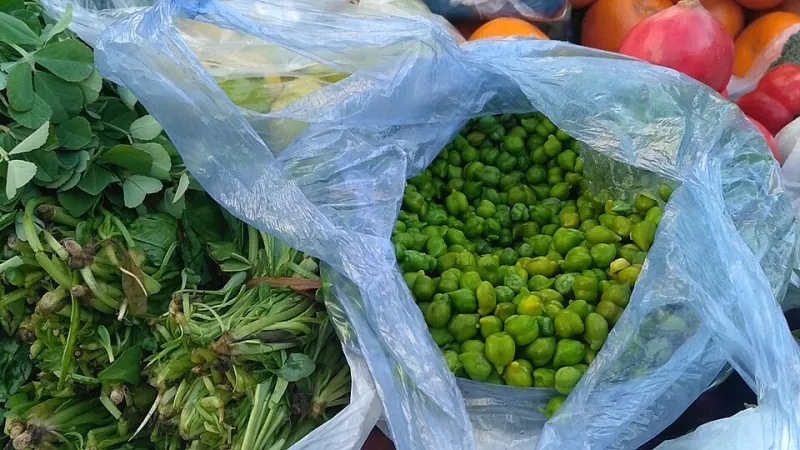
Photo: Jazze7, CC0, via Wikimedia Commons
The list is written in pencil, which is the first thing you learn. It's 5:40 on a Saturday, the van smells faintly of yesterday's cardboard and today's rosemary, and the sheet on the dashboard has already been rewritten twice since Thursday. Not because we're disorganised. Because a caterer's shopping list isn't a menu — it's a set of bets.
By the time we're parked up, there's a wedding on the Thursday, a Sunday lunch for thirty-two, and a corporate lunch that lands on the Tuesday with the sort of confidence that only a client who has never done this before can muster. Three kitchens. One morning. Same crate.
The list gets written before the menu does
People assume we decide the dishes and then go shopping. It's the other way round. We go and see what's good, and the menu rearranges itself around that.
This is why the list is organised by ingredient rather than by course. Leeks appear three times — under the wedding starter, under the Sunday lunch vegetable, and under a soup that might not happen. If the leeks are small, sweet and tight, all three are on. If they're thick and woody, the soup goes and we lean harder on celeriac, which is having a very good winter regardless.
That's the unglamorous truth of buying for several events at once: you're not shopping for dishes, you're shopping for ingredients that can carry three hats. One crate of good leeks, one sack of potatoes, one tray of forced rhubarb that can be a fool on Thursday and a compote on Sunday. Nothing goes in the van unless it has at least two jobs.
What comes home, and what stays in the crate
The stallholders know us, which means they show us the second crate before we ask. We reject more than you'd think, and almost never because of price.
- Leeks with soil still on them. Good. That's a leek that's been in the ground this week. A leek that's been through a wash line and a cold chain for six days looks tidier and tastes of nothing.
- Herbs that have been in a fridge since Tuesday. If the parsley is limp at the stem and not just at the leaf, it's not coming. We'd rather change the garnish.
- Rhubarb that's been forced too fast. Forced rhubarb is a January miracle — grown in the dark in Yorkshire sheds, picked by candlelight, pink as anything. But pushed too hard it goes hollow and stringy in the middle, and no amount of sugar rescues that. We break a stick in half to check.
- Purple sprouting broccoli with yellow at the head. It's just tired. It'll be yellow in the pan by Thursday.
- Citrus with a thick, dry pith. You can feel it through the skin — lighter than it should be for its size. All pith, no juice, and no use on a January table.
Nothing gets rejected for being unfashionable. A misshapen parsnip tastes like a parsnip. A perfectly uniform one grown somewhere sunny and shipped a long way often doesn't.
The citrus problem, and why it matters more in winter
Here's the oddity of a British winter larder: the brightest things on the table in January have almost all travelled. Blood oranges, Seville oranges for marmalade, lemons, forced rhubarb if we can get it.
We don't pretend otherwise. Instead we buy with intent. A blood orange sliced thin over a winter salad does more work than three imported tomatoes ever will, and it costs less. Seville oranges arrive in a narrow window in January, bitter and unwieldy and absolutely worth the fuss. Forced rhubarb turns up around the same time and disappears by March, which is exactly why we build menus around it while it's here rather than in June when it's a memory.
The rest of the plate stays stubbornly local. Celeriac, swede, January King cabbage, stored apples, the last of the beetroot, wet walnuts, and whatever game the shoot has been kind enough to send our way. That's not a compromise. It's the reason winter food tastes of something.
The host's version of the list
You don't need a van or three kitchens to shop like this. You need one habit: stop shopping for recipes and start shopping for ingredients.
A few things that translate directly to a Saturday morning with a trolley and a guest list of eight:
Ask what came in this morning. Not what's cheap, not what's on offer — what's fresh. Any good stallholder will tell you, and they'll tell you honestly if you ask twice.
Buy the best thing and build around it. One really good celeriac, roasted whole in salt, will outshine a plate of six average vegetables every time. Caterers call this anchoring a menu. Hosts call it not overthinking it.
Plan two meals per purchase. A bag of leeks is a side dish and a soup. A tray of rhubarb is a pudding and a breakfast. That's not thrift, it's just how a professional kitchen writes a shopping list.
Have a swap ready. If the fish looks tired, know before you leave the house what you'll do instead. The best catered menus are the ones with a plan B already costed.
Don't buy for the photo. If a recipe needs something that isn't at its best in November, it's the wrong recipe for November. There will be another eleven months.
The drive back
By nine we're loaded and the list is a mess of ticks and crossings-out, which is how it should look. The rhubarb is in the cool box. The leeks are in a crate, soil and all, because they keep better that way. Something has been swapped, something has been added, and one dish on Thursday's menu has quietly disappeared.
That's the whole job, really. Not deciding what to cook, but knowing what's worth carrying home — and having the nerve to leave the rest in the crate.