Crisp Yorkies, Steady Gravy: Taking Sunday Lunch to a Forty-Seat Room
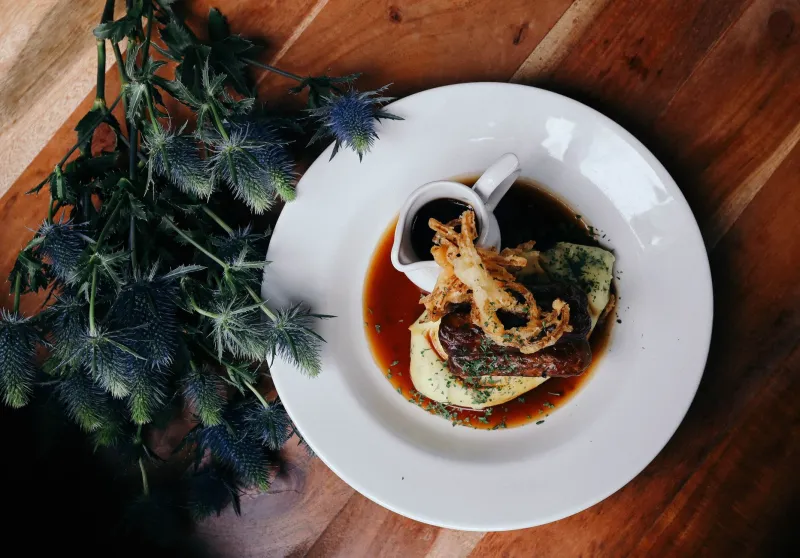
Sunday lunch is a mood as much as a menu. The meat should be carved, the Yorkies should crackle when they meet the gravy, and the vegetables should taste like they were cooked by someone who cared rather than boiled by someone who didn’t. When you’re serving forty people without a carvery, a commercial kitchen or a queue snaking past the tea urn, the trick is to stop thinking of it as a giant roast dinner and start thinking of it as a service with a very good smell.
That shift matters. A carvery works because it is a horizontal operation: meat here, veg there, gravy at the end. Take the carvery away and you need a plan. The good news is that a proper Sunday lunch for a crowd is entirely doable in a village hall, a hired space or a home kitchen with a sensible oven schedule. You just have to protect the things that make it Sunday lunch: heat, generosity and gravy.
Start with the joint, not the oven
The oven is not the first question. The first question is which joint will forgive you. For forty, we would rather cook three or four similar-sized joints than one heroic monster that cooks unevenly and needs half the morning to rest. Topside, rolled shoulder of pork, leg of lamb or a mix of chicken and beef all work, but keep the menu tight. Two meats are plenty. Three starts to feel like a wedding buffet pretending to be Sunday lunch.
Work backwards from service. If you want to sit people at one o’clock, the meat needs to be out of the oven with enough time to rest properly — not so early that it goes cold, not so late that you are carving while guests are already looking at the Yorkshire puddings. Resting is not a pause; it is part of the cooking. Wrap the joints loosely in foil, then in clean towels, and park them somewhere warm but not hot. A cool box lined with towels works surprisingly well. The meat will relax, the juices will settle and carving will be far kinder to you.
Season properly the night before if you can. Salt early, then leave the joint alone. A Sunday roast does not need a lot of fuss, but it does need confidence.
Yorkies: the crispness problem
Yorkshire puddings are the first thing to suffer when you scale up. Stack them and they steam. Cover them and they go leathery. Make them too early and they lose their swagger. The answer is to par-bake and re-crisp. Mix the batter in advance and let it rest properly. Get the oil properly hot before the batter goes in. Bake in trays rather than one huge tin, so you can rotate them without losing the whole batch to the middle shelf.
Then, close to service, give them four or five minutes in a hot oven to bring the edges back. Keep them in a single layer, in an open basket lined with paper, and never put a lid on them. Make more than you think you need. Someone will ask for a second one, and someone else will ask quietly after that.
Vegetables that don’t surrender
Vegetables are where a big lunch can go wrong quietly. A giant pot of greens left on a low heat will turn khaki. A tray of roast potatoes covered tightly will go soft. The aim is to cook in batches and hold with respect.
Root vegetables are your friends: carrots, parsnips, celeriac, red onion, squash. Roast them in hot trays with space between them, not piled up like a winter coat cupboard. Parboil potatoes, rough them up in the colander, then roast in hot fat until they have proper edges. If you need to hold them, keep them uncovered in a low oven and give them a final blast just before service. Greens should be blanched, refreshed and finished in butter at the last minute. Cauliflower cheese can be made ahead and baked until bubbling. Peas can be cooked in small batches and tipped into a warm bowl with butter and mint.
The rule is simple: vegetables should be hot, bright and not exhausted. If they have been sitting under a lid for an hour, they will taste like it.
The gravy gap
This is the real test. Gravy is not a condiment; it is the thread that ties the plate together. For forty, make a proper base ahead: roast bones or vegetables, onions, herbs, a little flour, stock, and time. Thicken it to a consistency that coats the back of a spoon but still moves. Keep vegetarian gravy separate and label it clearly.
At service, do not pre-pour gravy over every plate unless you know your guests. Some people want a light drizzle; others want their Yorkshire pudding to float. Use jugs and pour at the table. Two or three staff with jugs can move around a room faster than a single gravy station, and it feels more generous. Keep the jugs hot, replenish them often and do not let the last table wait while someone hunts for a ladle.
A forty-plate timeline
Prep what you can on Saturday: peel and cut roots, make the gravy base, trim the meat, set the tables. On Sunday, get the joints in early enough to rest before service. While they rest, crank the oven for Yorkies and roast potatoes. Blanch the greens. Warm the plates. Put someone in charge of gravy and someone else in charge of the door.
Plate meat and Yorkshire puddings first, then send vegetables around the tables in warm dishes. It keeps the plate from looking like a canteen tray and lets people take what they actually want. If you are plating fully, keep the line short and the plates warm. Dietary plates should be labelled and handed over personally, not left to guesswork.
Dessert should be something that does not compete: apple crumble, steamed pudding, a chocolate tart, plenty of custard. Then tea and coffee, because Sunday lunch without a pot of tea is just a big meal.
No carvery, no problem. A Sunday lunch for forty is really about timing, warmth and a jug of gravy that keeps coming round. Get those right and the room will feel like the best pub in Britain, even if the nearest bar is a trestle table with a tablecloth.