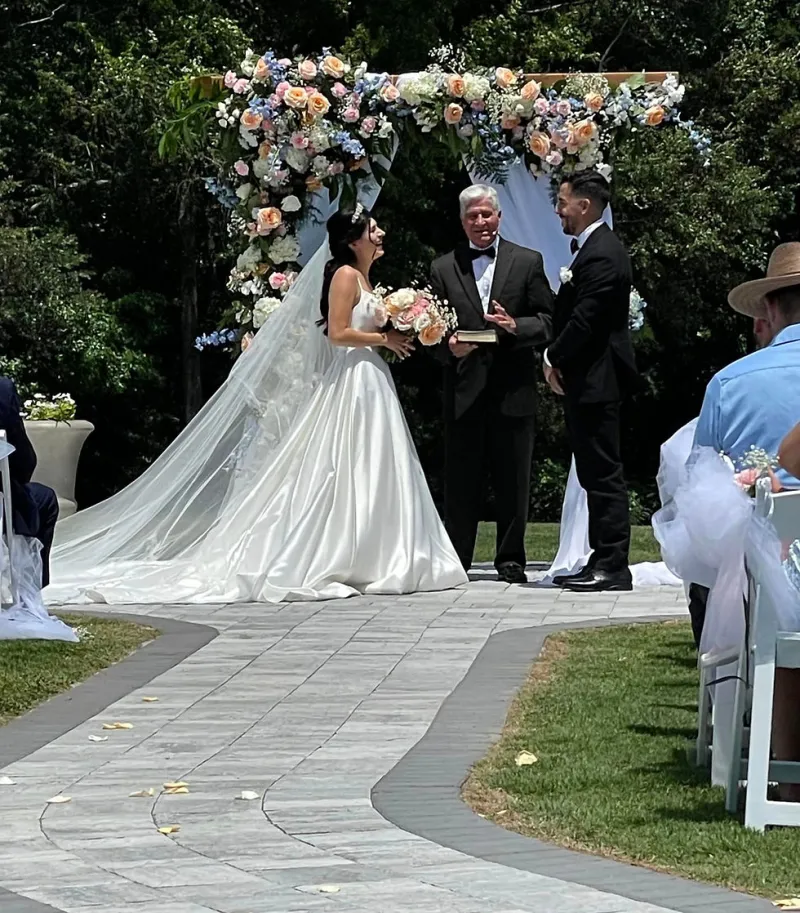
Chairs Into Tables: The Quiet Choreography of a Wedding Room Changeover

Photo: Warren LeMay from Covington, KY, United States, CC BY-SA 2.0, via Wikimedia Commons
There is a moment at every wedding when the day splits in two. One minute a room is a theatre of vows, hushed and upright and slightly nervous. The next it needs to be a dining room — linen, glassware, the smell of something warm coming out of the kitchen. Between those two versions of the same space sits a window of roughly ninety minutes, and it is, quietly, the most demanding part of the entire job.
Guests rarely see it. That is the point. But if you have ever wondered why your caterer asked so many oddly specific questions about doors, corridors and where the band plans to park the van, the answer usually lives in this window.
The clock starts before the ceremony does
Good room flips are not won in the ninety minutes. They are won the day before, and often the week before. When we walk a venue, we are not just looking at the pretty bits. We are counting the width of the gap between the ceremony chairs and the wall. We are checking whether the tables can be stacked somewhere that is not the lawn, because a British October will find them. We are measuring the route from the kitchen door to the far corner table, because a plate that travels badly arrives badly.
In a marquee or a village hall — the two venues that make up so much of the UK wedding calendar — the plan is often drawn on paper long before a single chair is moved. We will know which trestle goes where, which hatch is for hot food and which is for the bar, and which member of the team is responsible for the lone table that always seems to end up behind a pillar.
Ninety minutes, four jobs, one room
Strip it back and the changeover is four tasks running at once. First, the ceremony furniture has to go: chairs stacked or walked out, the registrar's table cleared, the aisle markings lifted. Second, the dining room has to arrive: tables positioned, cloths dropped, places laid, centrepieces placed without a single glass being chipped. Third, the front of house has to reset itself — canapé trays ready, drinks poured, the welcome table relocated to somewhere guests will actually find it. And fourth, the kitchen has to hit its marks, because the first course does not wait for anyone's seating plan.
That is why you will see a caterer moving with a particular kind of calm that looks a bit like urgency. There is no theatrical shouting. There are quiet instructions, a lot of pointing, and a run-through of the seating plan that happens twice, because someone will always have moved a name card.
The one-entrance problem
Here is a small detail that causes an outsized headache: a room with a single door. Lovely for atmosphere, less lovely when you need to move sixty chairs out, forty guests in, and a tray of smoked salmon blinis through the same gap in the same ten minutes.
The fix is choreography. We hold guests in a separate space — a garden, a courtyard, a bar area — for slightly longer than feels natural, and we use that pause for the heavy lifting. Canapés help enormously here. A guest with a drink and something small and warm in their hand will happily linger in a corridor for twenty minutes. A guest with nothing to do will start opening doors to see what is happening.
If the venue has a second exit, even a fire door that can be propped, the whole operation loosens up. If it does not, we plan the flow in one direction only: chairs out first, then tables in, then guests. Never all three at once, however tempting the clock looks.
What hosts can do before the day
Most of the pressure in this window is removed by decisions made weeks earlier.
- Ask about the flip at the viewing. Not as an afterthought, but as a proper question. Where do the ceremony chairs go? Who moves them? Is there a storage room, or are we stacking them in the marquee's back corner?
- Keep the ceremony layout simple. An aisle lined with heavy pedestals and a twelve-foot arch looks wonderful and takes four people to dismantle. If you love it, fine — just make sure the caterer knows it exists and has the hands to move it.
- Think about the bar. A bar that can serve through the ceremony, or at least be ready the second guests emerge, buys everyone ten valuable minutes.
- Be honest about guest numbers. A room that seats eighty comfortably can be flipped in under an hour. Cram a hundred in and every movement becomes a negotiation.
- Nominate one point of contact. Not three. Not the bride's mother and the best man and the venue manager all at once. One person who can say yes or no, so the team is not waiting for a committee.
What can go wrong, and what usually doesn't
The classic near-misses are rarely dramatic. A tablecloth that is the wrong size and has to be swapped. A supplier who arrives at the front door at the exact moment the aisle is being cleared. A best man who has borrowed a chair for a photograph and forgotten to return it. A marquee that has been warmed all morning and suddenly feels like a greenhouse once sixty people sit down.
What almost never goes wrong is the thing guests worry about: the food. The kitchen is on its own clock and has been since before the bride walked in. Plates are timed to the moment the last guest sits, and the canapés are paced so nobody is starving by the time the soup arrives.
The bit nobody claps for
There is no applause for a room flip. Nobody raises a glass to the person who carried forty chairs through a side door in the drizzle. But if the day feels seamless — if guests wander from confetti to canapés to a beautifully set table without ever noticing the room changed shape around them — then the ninety minutes did their job.
That is the quiet bargain of wedding catering. You get the vows, the speeches, the first dance and the last spoonful of pudding. We get the ninety minutes in the middle, and we will happily keep it.